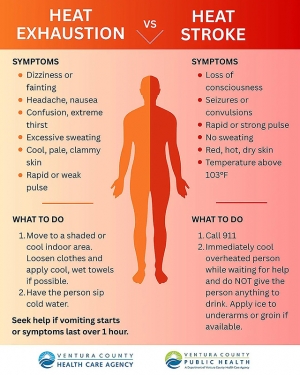
The County of Ventura has issued an extreme heat warning for this past week and released some information on the do’s and do nots during extreme heat. Above is a chart for recognizing the signs and differences of heat exhaustion and heat stroke. Photo credit and for more information visit https://emergency.venturacounty.gov/.
Released March 16, 2026
Ventura County, Calif. — The National Weather Service in Los Angeles/Oxnard has issued an extreme heat warning from Tuesday, March 17, 2026, at 10:00 a.m. through 8:00 p.m. Friday, March 20, 2026. Temperatures in the valleys and inland mountain areas are expected to reach the 100-degree mark for a prolonged period of time, with relatively poor overnight recovery. A heat advisory has been issued for all other parts of the county – including along the coast and areas that are not commonly subject to high temperatures.
High temperatures may create a dangerous situation in which heat-related illnesses are possible. Residents are encouraged to: drink plenty of fluids, stay in air-conditioned rooms, stay out of the sun, check on relatives and neighbors, take extra precautions if working or spending time outside, and wear lightweight and loose-fitting clothing when possible. When possible, reschedule strenuous activities to early morning or evening.
To reduce risk during outdoor work, the Occupational Safety and Health Administration recommends scheduling frequent rest breaks in shaded or air-conditioned environments.
Children, the elderly, and those with significant underlying medical conditions are most susceptible to the effects of heat. No person or pet should be left in an enclosed vehicle or direct sunlight for extended periods of time. Temperatures quickly rise to life-threatening levels – even if the windows are partially open.
Anyone overcome by heat should be moved to a cool and shaded location. It is also important to know the signs and symptoms of heat exhaustion and heat stroke.
Signs and Symptoms of Heatstroke
• Symptoms: Headache, nausea, red, hot, and dry skin, no perspiration, body temperature of 104°F or higher, chills, rapid pulse, confusion and/or altered mental status.
• First Aid: Cool person immediately! Move to shade or indoors, wrap in a cool, wet sheet, and get medical assistance.
• Heat stroke is an emergency! Call 9 1 1.
To help provide respite from the heat, residents who live in heat-prone areas are encouraged to seek refuge in a designated cooling center. For a list of current cooling centers, please call 211 or visit www.vcemergency.com.
Tips for Responding to Extreme Heat Events
Do
• Use air conditioners or spend time in air-conditioned locations such as designated cooling centers.
• Use portable electric fans to exhaust hot air from rooms or draw in cooler air.
• Take a cool bath or shower.
• Minimize direct exposure to the sun.
• Wear sunscreen with SPF 15 or higher and reapply every 2 hours.
• Stay hydrated – regularly drink water or other nonalcoholic fluids.
• Wear loose fitting, light-colored clothes.
• Check on people who may need assistance related to the heat.
• Know the symptoms of excessive heat exposure and the appropriate responses.
Do not
• Leave children and pets alone in cars for any amount of time.
• Drink alcohol to try to stay cool.
• Wear heavy, dark clothing.


